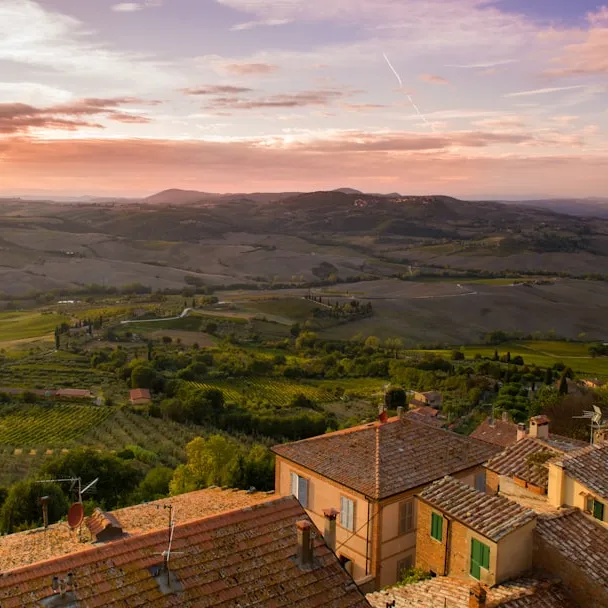
Wine in Tuscany, Art in Florence: How to Do This Trip at Every Budget
Wine in Tuscany, Art in Florence: How to Do This Trip at Every Budget
Imagine this: you're sitting at a wooden table in a Chianti vineyard, a glass of Sangiovese in front of you, and the only sound is the wind moving through the vines.
Nobody is rushing you. Nobody needs anything from you. The afternoon stretches out like the hills themselves — unhurried, golden, entirely yours.
That's Tuscany. And I want to talk about how to get you there — whatever your budget looks like.
The Trip, First
Eight days. Florence bookending Tuscany's wine country like the covers of a very beautiful book.
You arrive into Florence and settle into the Oltrarno — the artisan quarter on the south side of the Arno, where the tourists don't wander and the locals actually live. An aperitivo. A slow walk. The city at its most honest.
Day two is the Uffizi at opening, before the crowds. Botticelli's Venus in the morning light is one of those moments you will not forget. Ponte Vecchio at dusk. Dinner in a backstreet trattoria where the menu is on a chalkboard and the pasta is made that morning.
Then south. Chianti. The rolling hills you've seen in every Tuscany photo — except now you're inside them. A wine tasting at a family-owned estate. Greve in Chianti's market, if the timing lines up.
Montalcino next — a medieval hilltop town with 360° views over Val d'Orcia and the finest Brunello you will ever taste. La Fortezza enoteca, inside the town fortress walls. I'd put my name on that recommendation every single time. 🍷
Siena deserves a full day. The Piazza del Campo before 9am is one of the great public spaces on earth. The Duomo is extraordinary. The contrade neighbourhoods — each with their own pride, their own trattoria — are where you feel the city breathe.
Then two stops almost nobody includes, and both of them stay with you longer than the famous ones.
Volterra. Etruscan ruins older than Rome. Alabaster workshops open right onto the street — you can watch craftsmen at work and walk out with something extraordinary for the price of a souvenir. Medieval walls with valley views that go on forever. Almost no tour groups. I will not apologize for how much I love this town.
Bagno Vignoni. A medieval village built around a thermal pool the Romans used — and it looks, I promise you, almost exactly the same. Steam rising off the water in the morning. Silence. One of the most photogenic and least-visited corners of Italy, and it costs you nothing to stand there and feel the history under your feet. ♨️
Day seven ends in Val d'Orcia. Day eight is a gentle return to Florence — a leather market, a last espresso, a farewell dinner watching the lights come up on the Ponte Vecchio.
You came for the wine and the art. You'll go home with something harder to name.
Now — let's talk about how to do this at the budget that works for you.
Economy: $4,000–$5,000 for Two
Tuscany is genuinely one of the more accessible regions in Europe, if you know where to bend.
Stay in agriturismos and family-run B&Bs. These are working farms and small guesthouses — often in better locations than the boutique hotels, almost always with better breakfast, and run by people who actually want to tell you where to eat. Expect to pay €80–€130 per night.
Get between cities on regional trains. The Florence–Siena–Montalcino corridor is well served, and slower travel is not worse travel — it's just a different view from the window.
Do shared wine tastings rather than private. Chianti's co-ops and cooperative cellars do excellent group tastings for €15–€25 per person. You'll meet interesting people and drink the same wine.
Picnic lunches from local markets are not a budget compromise — they are, in my honest opinion, some of the best meals you'll have. A market in Greve in Chianti. A wedge of Pecorino from Pienza. Bread, olives, something with truffles. Eaten on a wall in the sunshine.
Volterra and Bagno Vignoni cost almost nothing. You just have to show up.
Total for two, including flights: $4,000–$5,000. Very doable.
Mid-Range: $7,000–$9,000 for Two
This is the sweet spot — and the tier where Tuscany really opens up.
Stay in boutique hotels in the hill towns. Not grand hotels — intimate ones, 12–20 rooms, with stone walls and a terrace and a host who knows every restaurant worth knowing. €180–€280 per night.
Hire a driver for the wine country days. This is worth every euro. A local driver who knows which estates are welcoming that week, which back road has the best view, and when to stop the car so you can just look. You'll drink more freely. You'll see more. The whole day changes.
Book private vineyard tastings. An hour in a barrel room with a winemaker who made the wine you're drinking is a different experience than a tasting room counter. Expect €60–€120 per couple.
Skip-the-line Uffizi entry — absolutely worth it, and not expensive. Do not queue for two hours when you could spend those two hours in the Oltrarno.
Restaurant dinners every night. Not Michelin-starred — just good. Tuscany's mid-range restaurants are some of the finest food you can eat anywhere on earth.
Total for two, including flights: $7,000–$9,000. This is the trip I build most often.
Luxury: $15,000+ for Two
If you want Tuscany to feel like a film, here's how.
Stay in a converted villa — a historic estate with private grounds, a pool, and staff. There are extraordinary properties in Chianti and Val d'Orcia that you won't find on a booking platform. These require relationships to access well. €500–€1,200 per night, and worth calculating differently when you consider what they include.
Your wine country days are led by a private sommelier. Cellar access that isn't open to the public. Vertical tastings of Brunello across multiple vintages. A winemaker's lunch at the estate, not the restaurant.
Chauffeur throughout — a professional driver who is yours for the eight days. Not transport, exactly. More like having someone exceptionally knowledgeable waiting outside every time you're ready.
Private after-hours Uffizi access is bookable with the right connections. The gallery at 7pm, before it reopens for a private event. Just you, the Botticellis, and the last of the evening light coming through the windows.
Michelin-starred dinners in Florence — Enoteca Pinchiorri if you want the full experience — and a farewell dinner that you will describe to people for the rest of your life.
Volterra and Bagno Vignoni still make the itinerary. Some things aren't improved by spending more money. They're just better when you have time to linger.
Total for two, including business class flights: $15,000–$20,000+.
Ready to Start Planning Yours?
Whichever tier feels right — or if you're somewhere in between — this is exactly the kind of trip I love to build.
I know these towns, these estates, these restaurants. I know which agriturismos are genuinely special and which boutique hotels aren't worth the price. I know the driver I'd send you with and the cellar I'd book first.
If any part of this itinerary gave you that quiet "I want that" feeling — let's talk. A free 30-minute call is the easiest place to start.
Book a call at maureencunningham.com — or just send me a message. That's literally what I'm here for. ✈️
